
A complete guide to New Zealand’s most stunning glow worm caves and adventures!
From a veteran adventure photographer that’s obsessed with bioluminescent glow worms, photographs them professionally for Nikon and the family run tours, and has spent several months exploring and going on every tour available in New Zealand!
If you like this list and want professional instruction on how to photograph them, I run an annual photography trip here taking you to the best caves, hands on instruction with your camera, step by step editing processes, and also night photography when not in the caves.
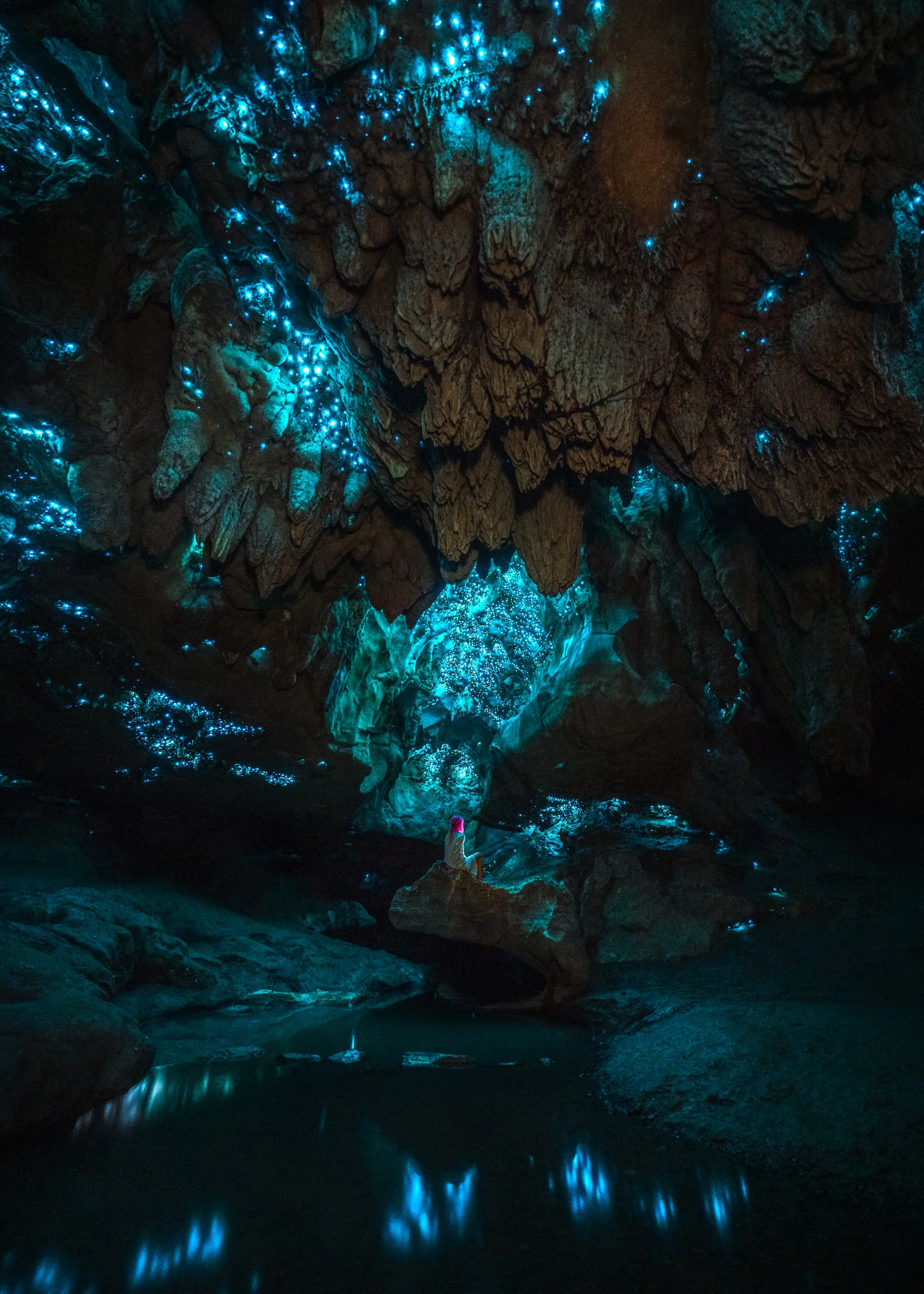
Thank you to this nice Greek lady who held still during my 12 minute long exposure!
What are Glow Worms?
“Arachnocampa Luminosa” or glow worms, are bioluminescent worms that live in the underground caverns, caves, and lush forests of New Zealand! New Zealand is primarily limestone and quite porous, over years water has seeped and eroded this limestone to form vast underground networks of tunnels, some several kilometers long and some caves been over 120 meters from the surface. Here is a bit of background about what they are, where they live, and context to help you on your next glow worm sighting or photographing adventure!
70-90 million years ago Australia and New Zealand broke off from the supercontinent Gondwana, over time New Zealand has been isolated and from that isolation many interesting animals have come be like the iconic Kiwi bird (also the nickname for New Zealanders) and glow worms! Notice the “arachna” part of Arachnocampa Luminosa? Forming webs like an arachnid, or spider, and luminosa from the Latin light, glow worms are actually “Fungas Gnats” that are in their maggot stage that cast silky vertical webbings from the ceilings of caves and then use a chemical reaction in their stomachs to then lure in other flies, mayflies, and little bugs to their net as food! “Glow Maggot” just doesn’t have the same ring to it as “Glow Worm”, ha! I find it somewhat perplexing how a fly species uses silky webbing like a spider, but are classically depicted and often found as the main victims in a spider’s web, just a cool observation.
The blueish-green lights you see are the worms using their light, often amplified into a wider glow by the surrounding webbings. The glow worm lifecycle looks something like this; they live in their worm state for about 9 months, then 2 weeks are in a pupae/cacoon form as a female or male, then hatch into flies that cannot feed (no mouth) but just f***, laying eggs all over the walls, upper creases, and between the stalactite formations. Glow worms require a moist environment, hence the river caves that hatch many other bugs for them to eat. Here’s a close up of one taken on a macro lens:
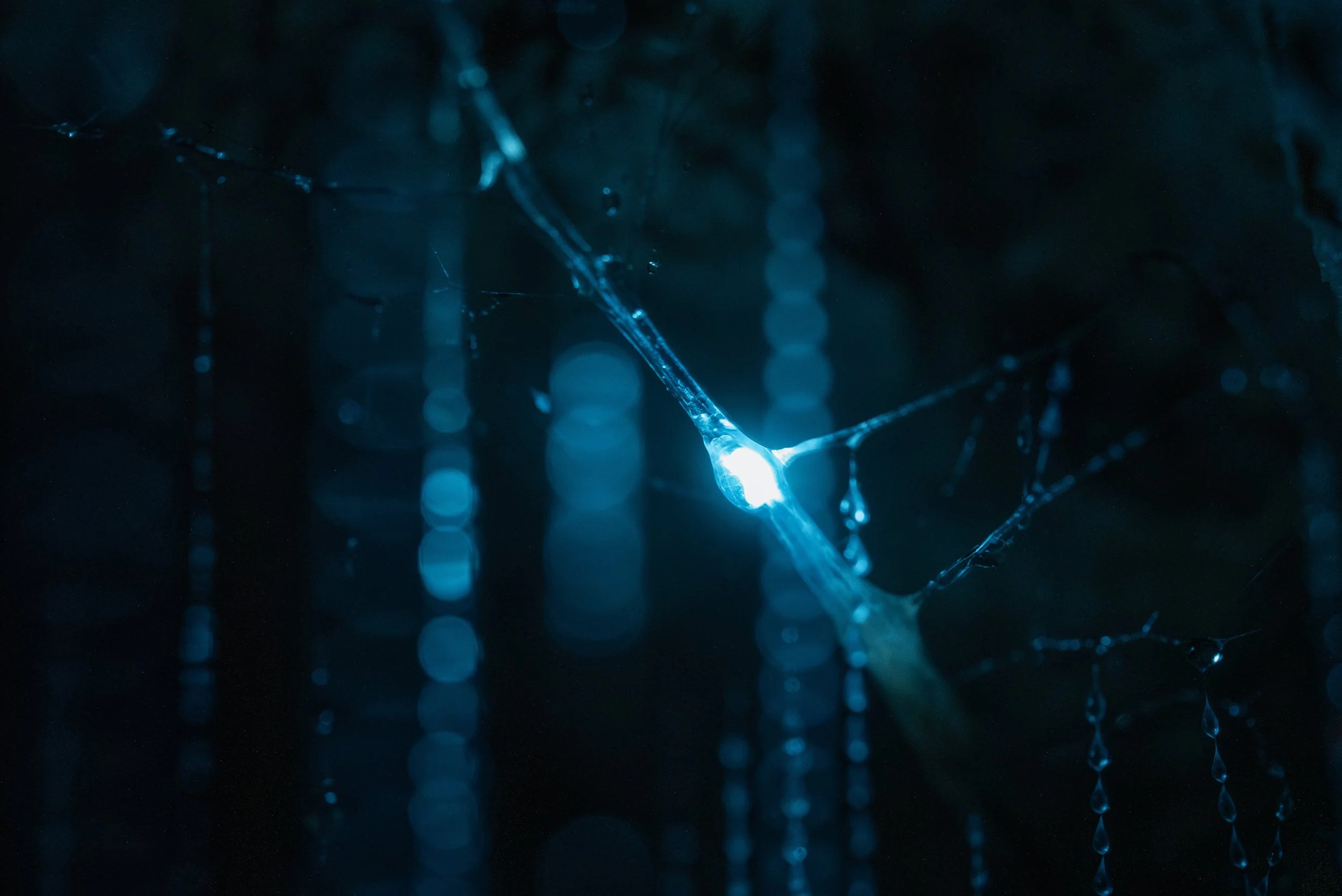
do they really look like that?
What you will be seeing in these photos and videos are long exposures, using anywhere from 10 - 900 seconds of long exposure, or the shutter of a camera being open to collect light often with a short burst of very dim light. The image above was 60 seconds at a very high setting, ISO 6400 on a professional grade Nikon z6ii camera. The blueish-green lights you see are the worms using their light when they are hungry to attract prey, often amplified into a wider glow by the surrounding webbings. If a glow worm is in ambient daylight around, let’s say, the mouth of a cave, they will turn their lights of to preserve energy, and also go into a “dormant” light mode when they have already caught prey or are digesting.
Modern cameras use long exposure to capture light over longer periods of time, so they can capture more detail and color aggregately, however you possess some of the best eyesight systems in the animal kingdom and you can absolutely see amazing swaths of lights; if you let your eyes adjust, it’s remarkable! Especially if you get in a tighter spot where there are glow worms, they can cast enough light for you to see stalactites, rocks, reflections in water, and even other people!
YOU NEED to give adequate time for your eyes to adjust!!!
I’d say 10 minutes to see results, 30 minutes uninterrupted (absolutely NO light) to maximize your viewing. This is similar to stargazing, where you truly need to let our eyes adjust to the low light environment. If there are other people viewing, please try your hardest to be respectful by using red light, but white light may be necessary as it can be slippery or uneven in areas and it’s safest to use white light, just try not to point it in people’s eyes and point it down at a lower lumin setting- even the white light on your phone screen can set your “night eye” adjustment progress back!
I recommend a headlamp like a Black Diamon Storm, which is rechargeable or AAA battery and has easily adjustable red and white light settings.
Where can I find them?
Primarily the North Island of New Zealand, but they are elsewhere!
Glow worms aren’t just exclusive to caves, but often I found them in massive quantities around the mouths of caves, and in the bush around water sources all over the North and South Islands of New Zealand! They actually aren’t exclusive to New Zealand, although by far the largest colonies and most impressive caves are all in New Zealand. There are glow worm caves on both the North and South Islands, and you can find them in the bush quite often but they’re only visible at night. In caves that are deep enough to have total darkness 24/7 and have glow worms living in them, they are visible all day and night- often some caves become even better at night as the populations can be extremely dense, but not visible during the day, around the cave entrances or just inside! This is true of the Waipu caves, I recommend going in at night. There are also Glow Worms in Australia, around the Blue Mountains, and then one cave in Alabama… very random! Different species I believe but I haven’t investigated that thoruoughly.
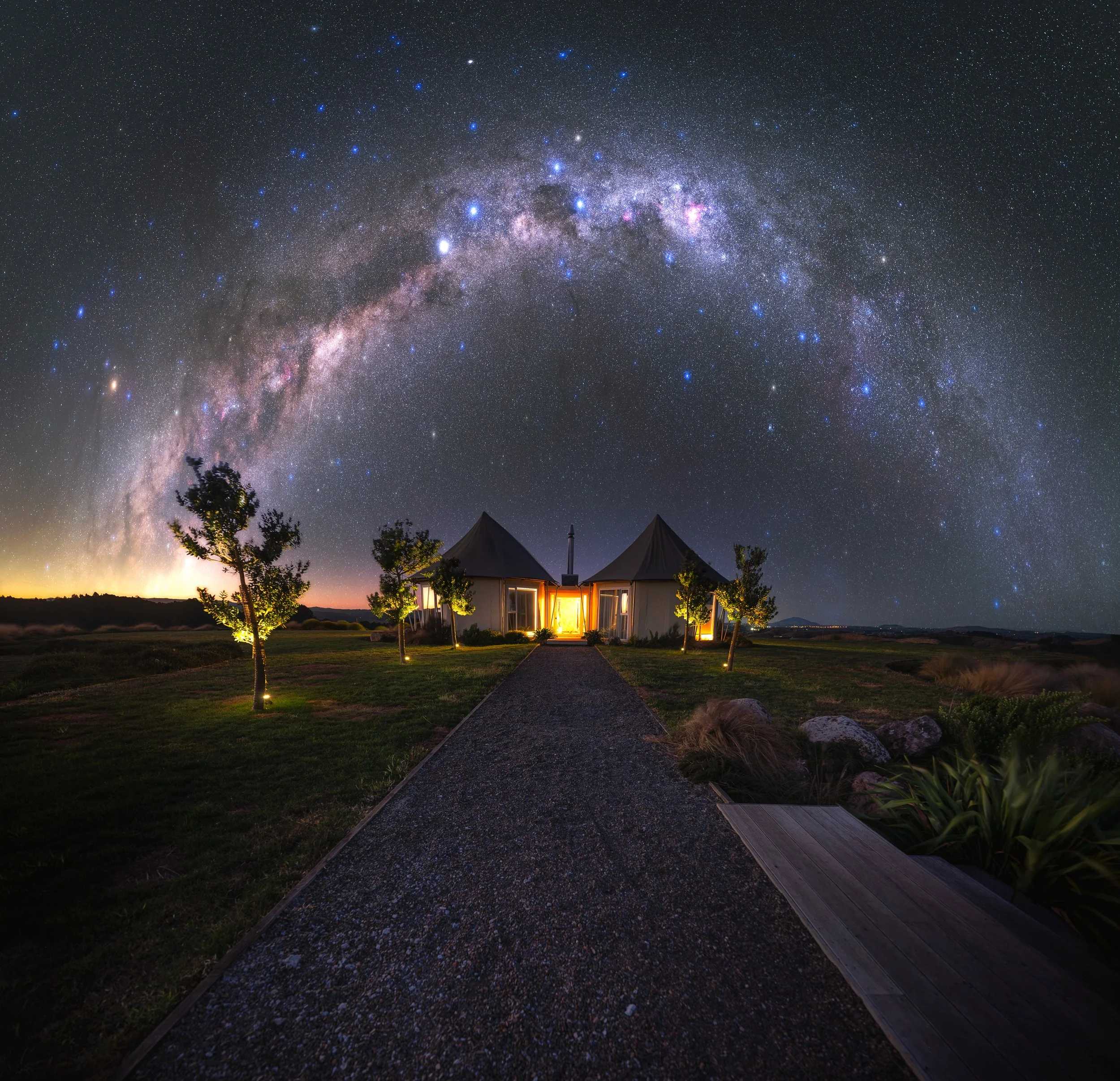
Waitomo, NZ is what I would call the Glow Worm “Mecca” of the world. Although the BEST tours aren’t found at the touristy caves in the Waitomo Village area… but nearby! I stayed in Te Kuiti with good food like the Stoked Eatery, and splurged at the luxury “glamping” accommodations at Wild Canvas with amazing views of Waitomo and the night sky. This is where we stay during our photography tour, edit photos, and also take night photos when not in the caves! Don’t let glamping fool you, it’s fancy and super nice. If you have the money I recommend “balling out” and staying at one of their two hilltop tents! They fill up well in advanced.
let’s get down to brass tax, here’s the list:
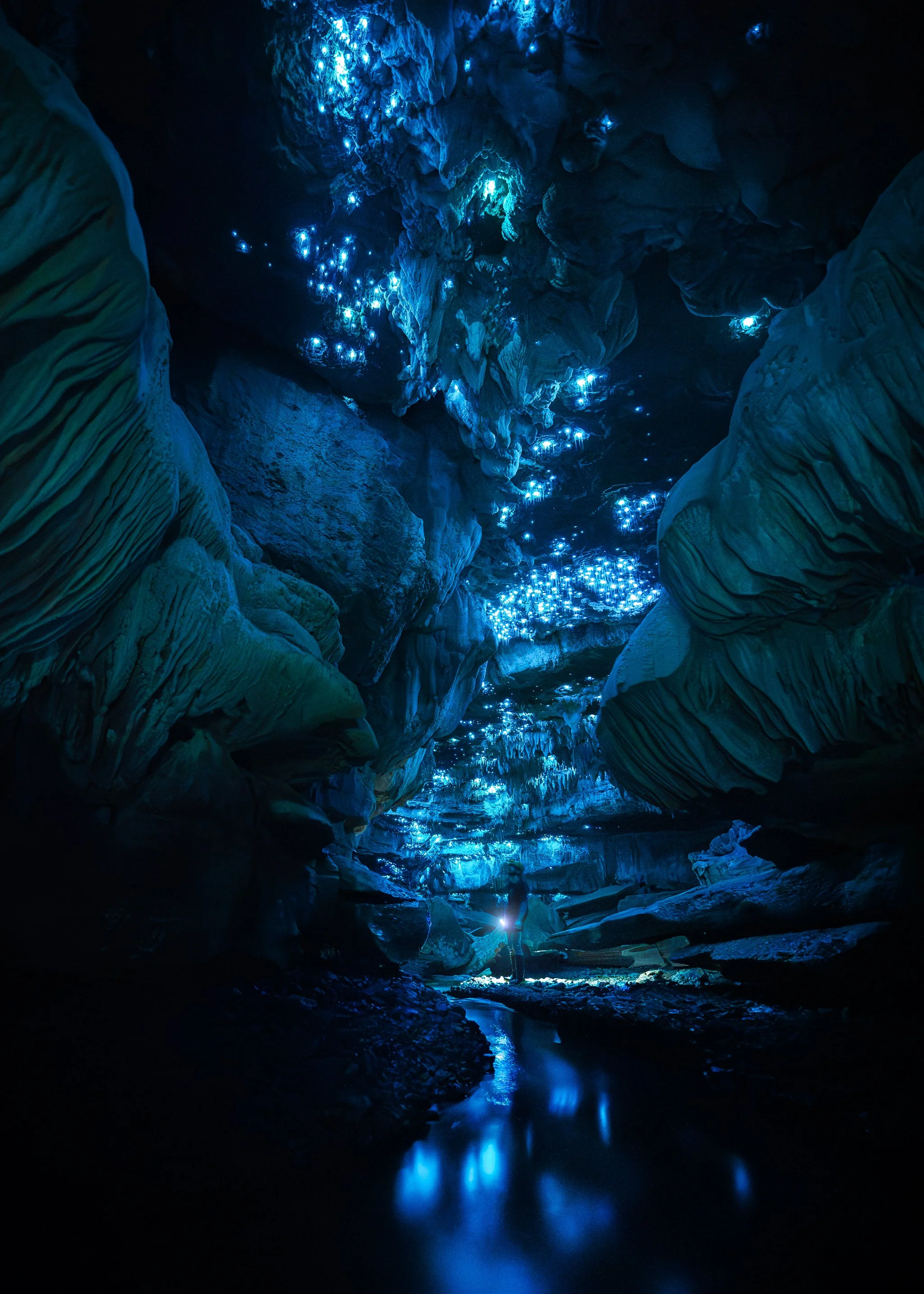
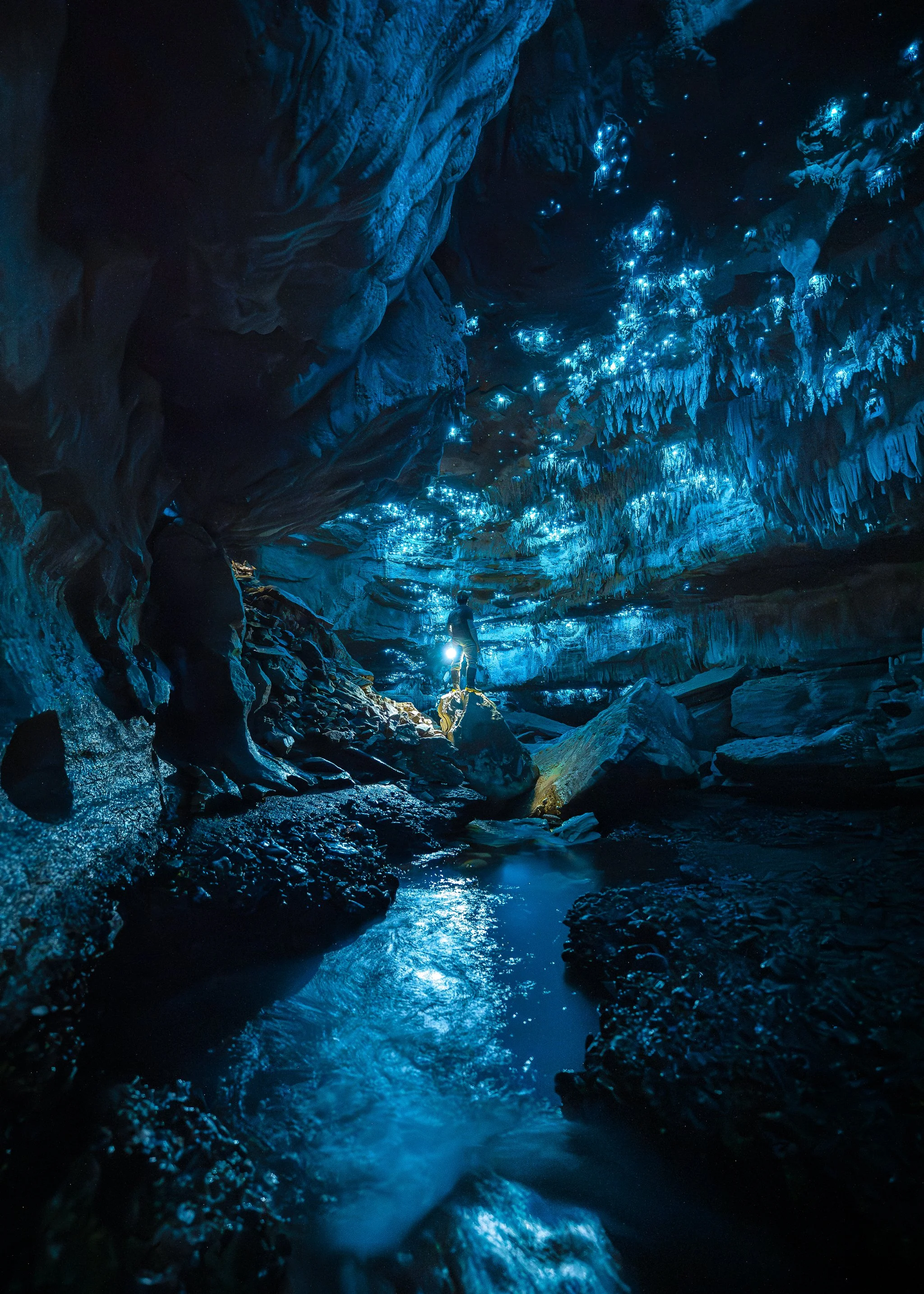
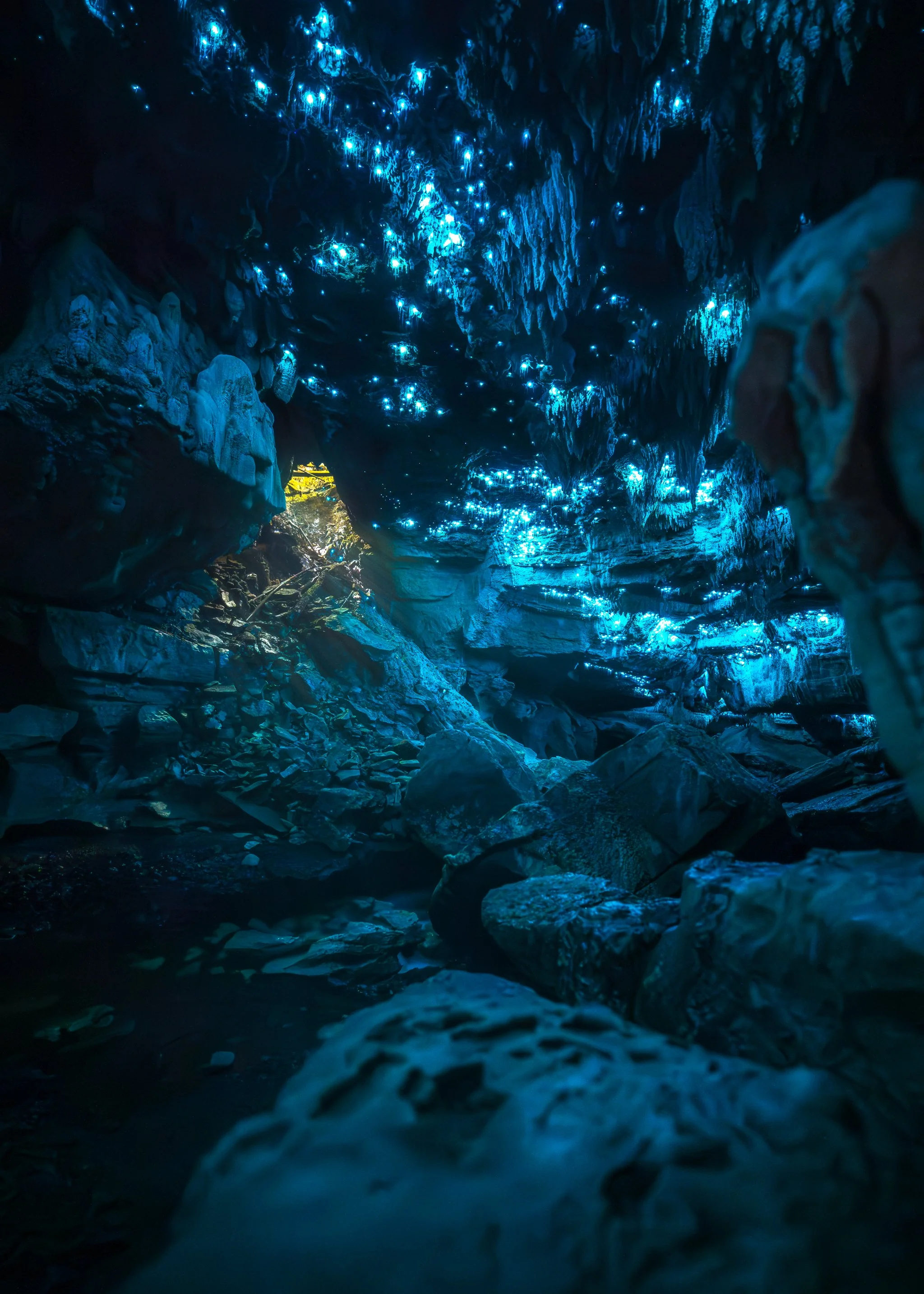
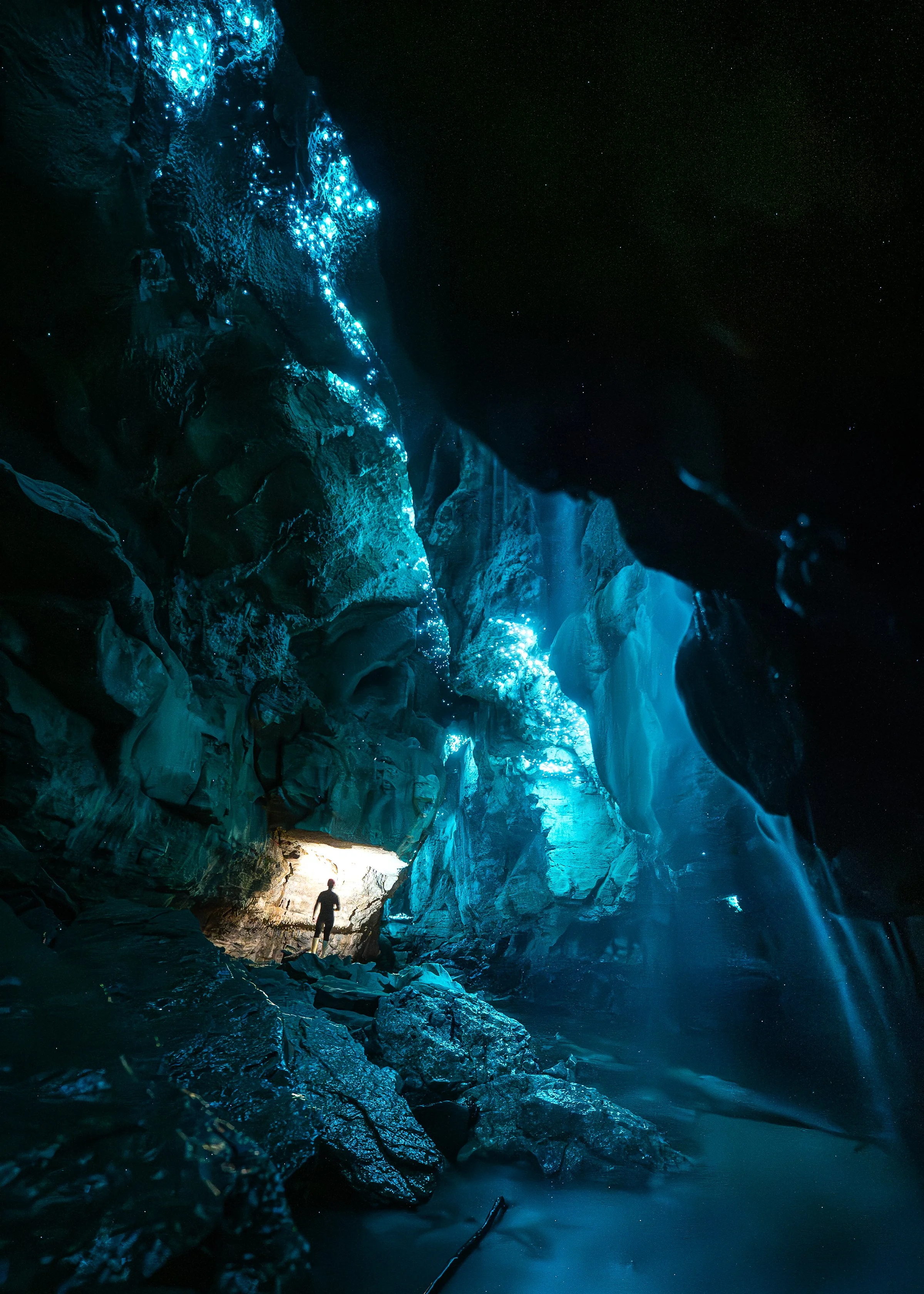
Down to Earth Waitomo is a small multigenerational family farm that has all the elements of a classic New Zealand cave tour, with remarkable chambers full of glow worms! It’s really cool they used to visit the caves as young kids, now they do a 4 hour tour guiding you through their cave system starting in their amazing conservation area forest (which helps the glow worm population tremendously!) down into their underground river caverns, epic rock formations, and ultimately into remarkable chambers light up by purely glow worms! The provide all the gum boots, warm layers, headtorches, and helmets; everything you need for the tour group with clean changing rooms and a break room at their facility.
The glow worm chambers are amazing during the day time tour, however I rank Down to Earth number one because of it’s private photography tours, especially the Ultimate Glow Worm Tour because several expanses of their caves that you do during the day, the glow worms aren’t visible until night! I think I may have been one of the first people to photograph these regions of the caves at night, it was a heck of an experience. There were so many glow worms, that they were literally falling off the ceiling! Getting evicted or something, totally understandable in this economy… (Likely getting in fights with other worms, lol!).
Tell Michelle or Ash that I sent you! Ash is a very authentic Kiwi, and quite the character, which really ads flavor to the tour. They keep the group sizes small and intimate, which I much prefer over the more touristy Rurakuri and main Waitomo Village tours.
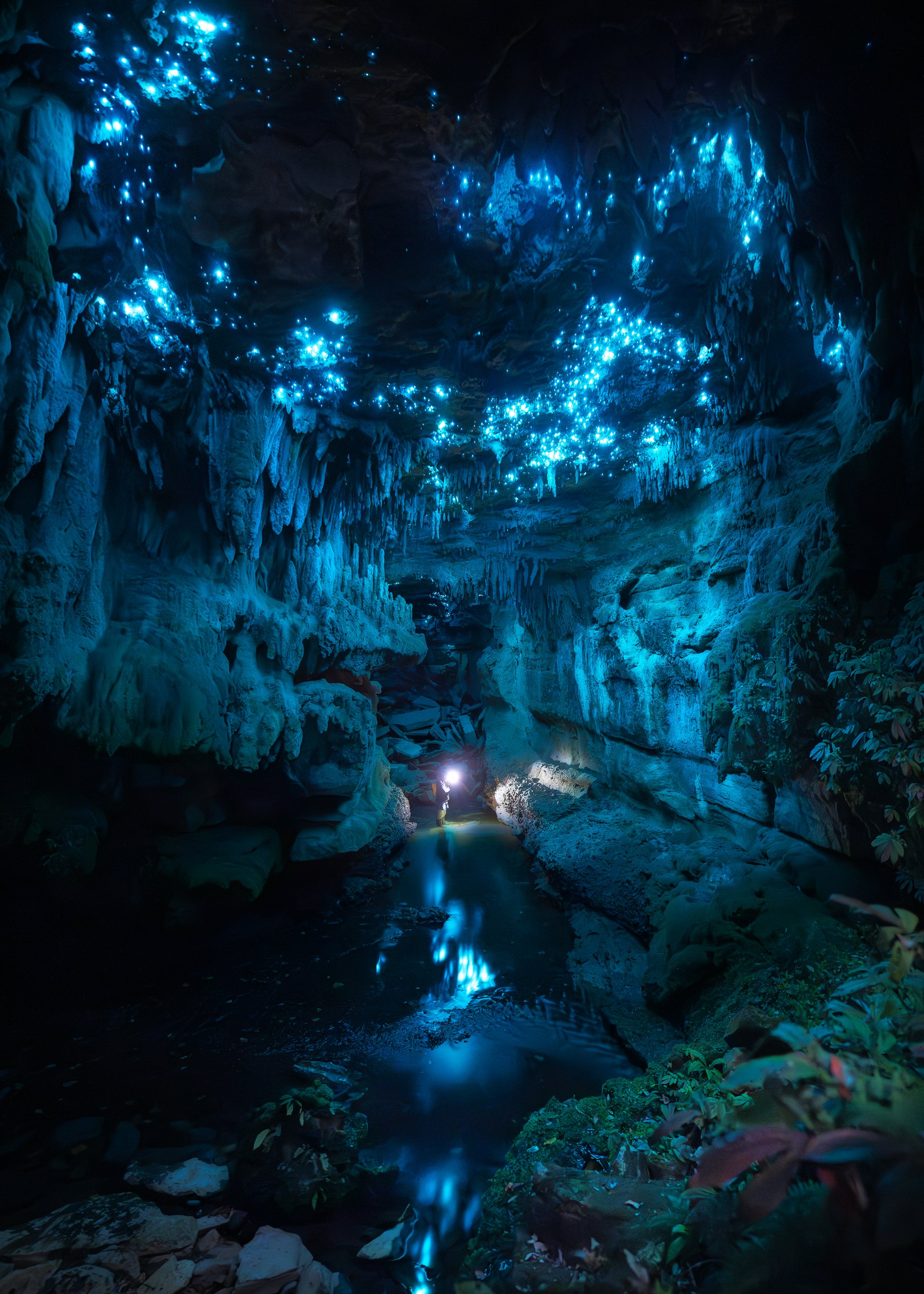
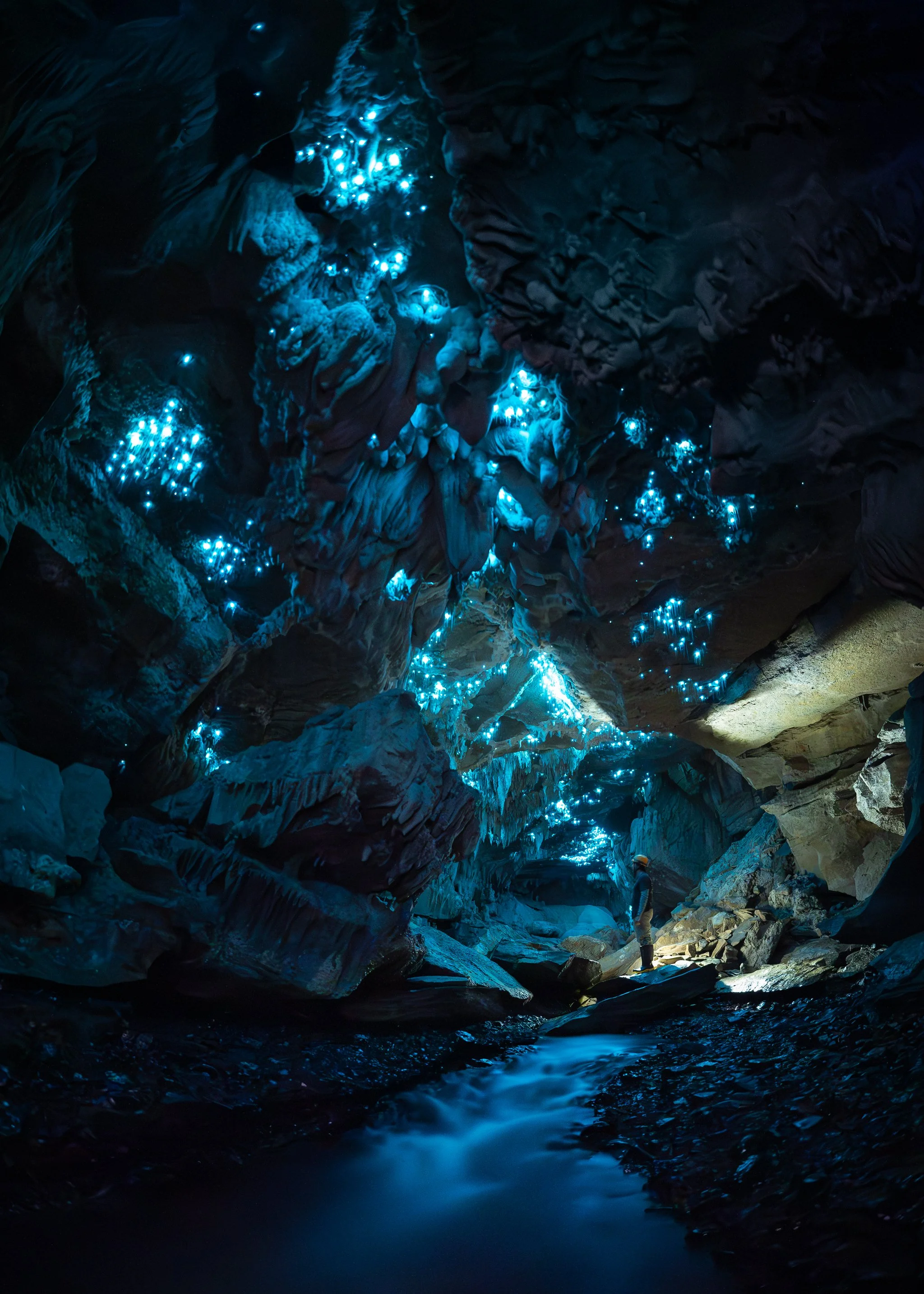
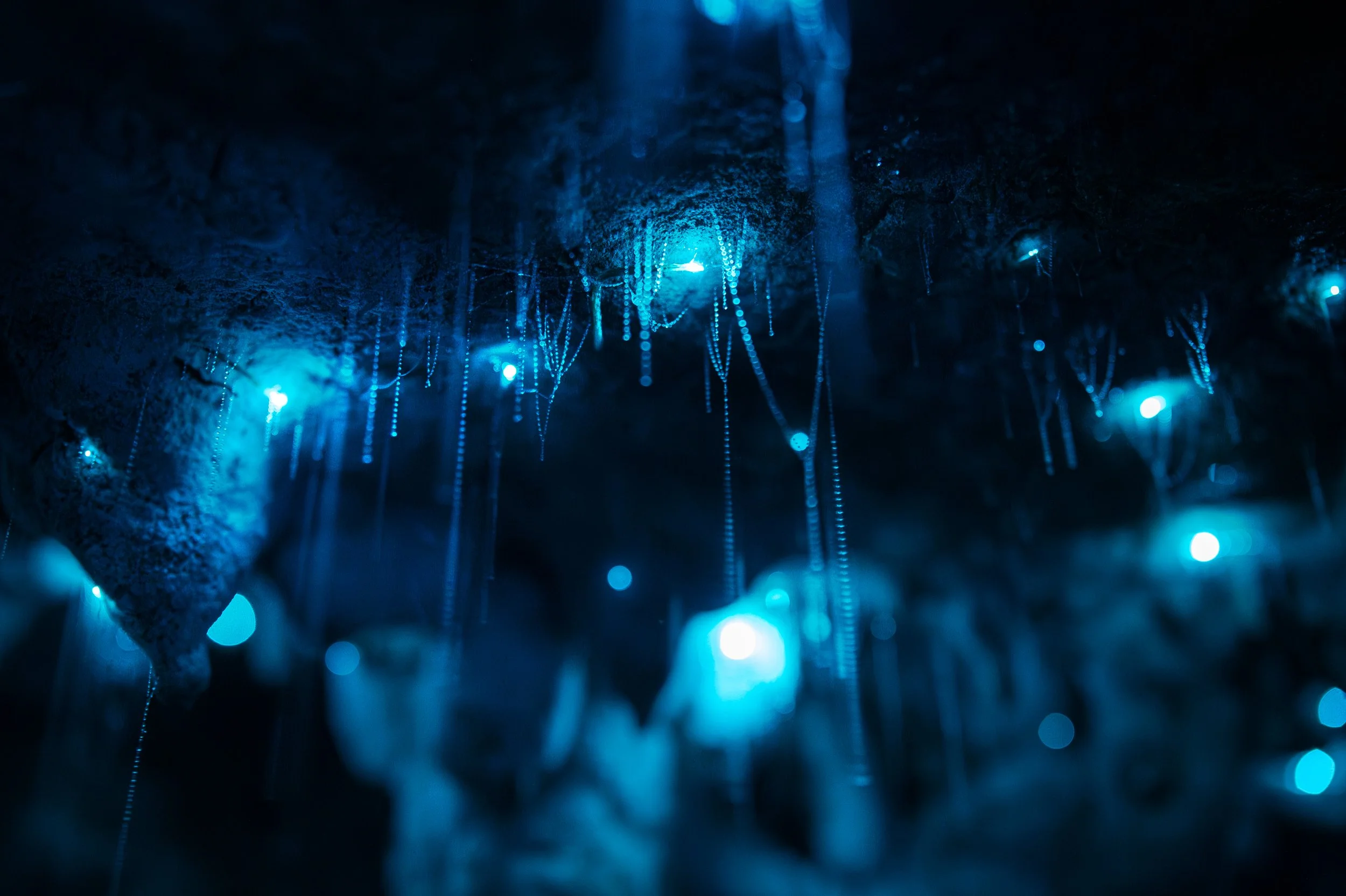
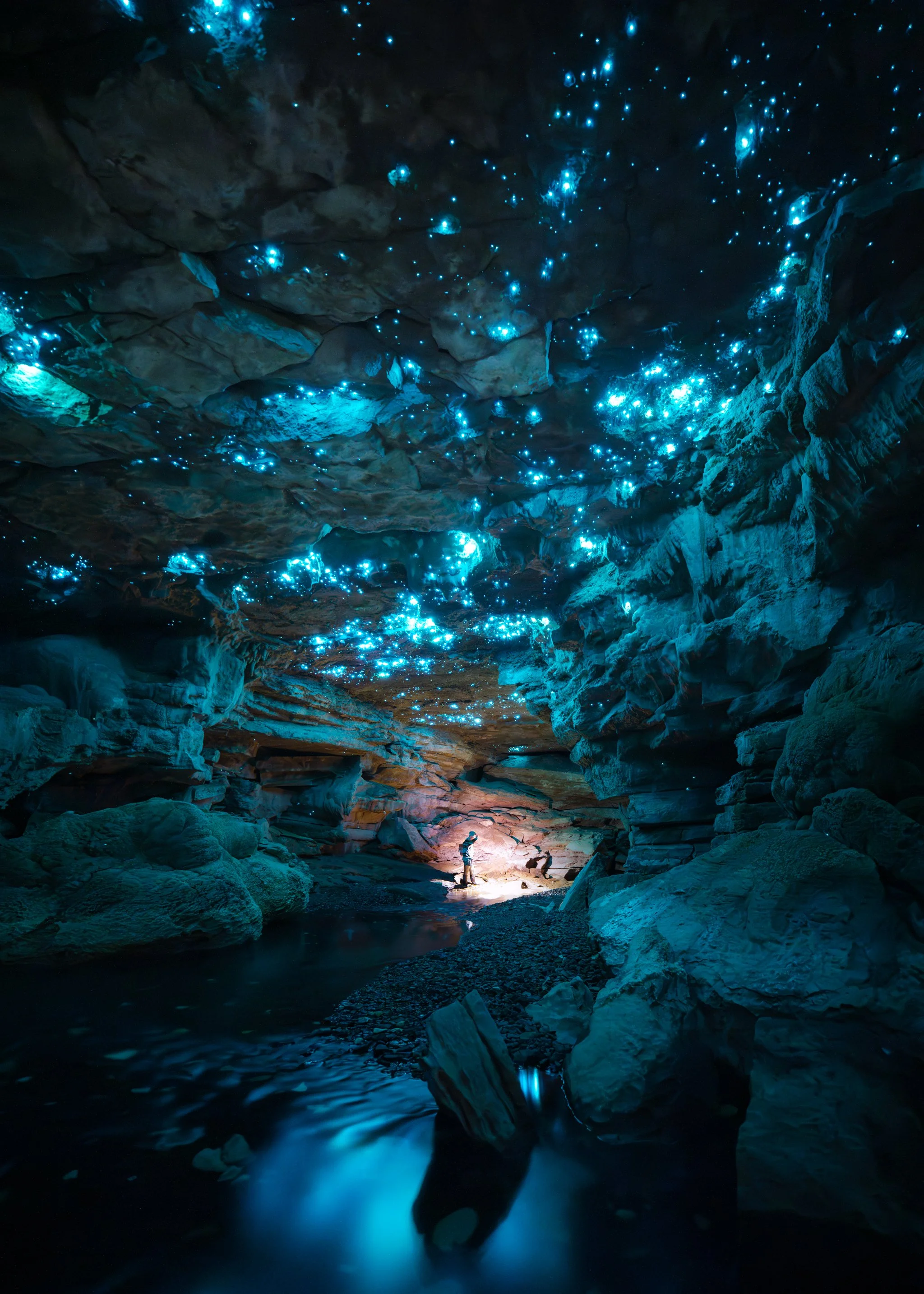
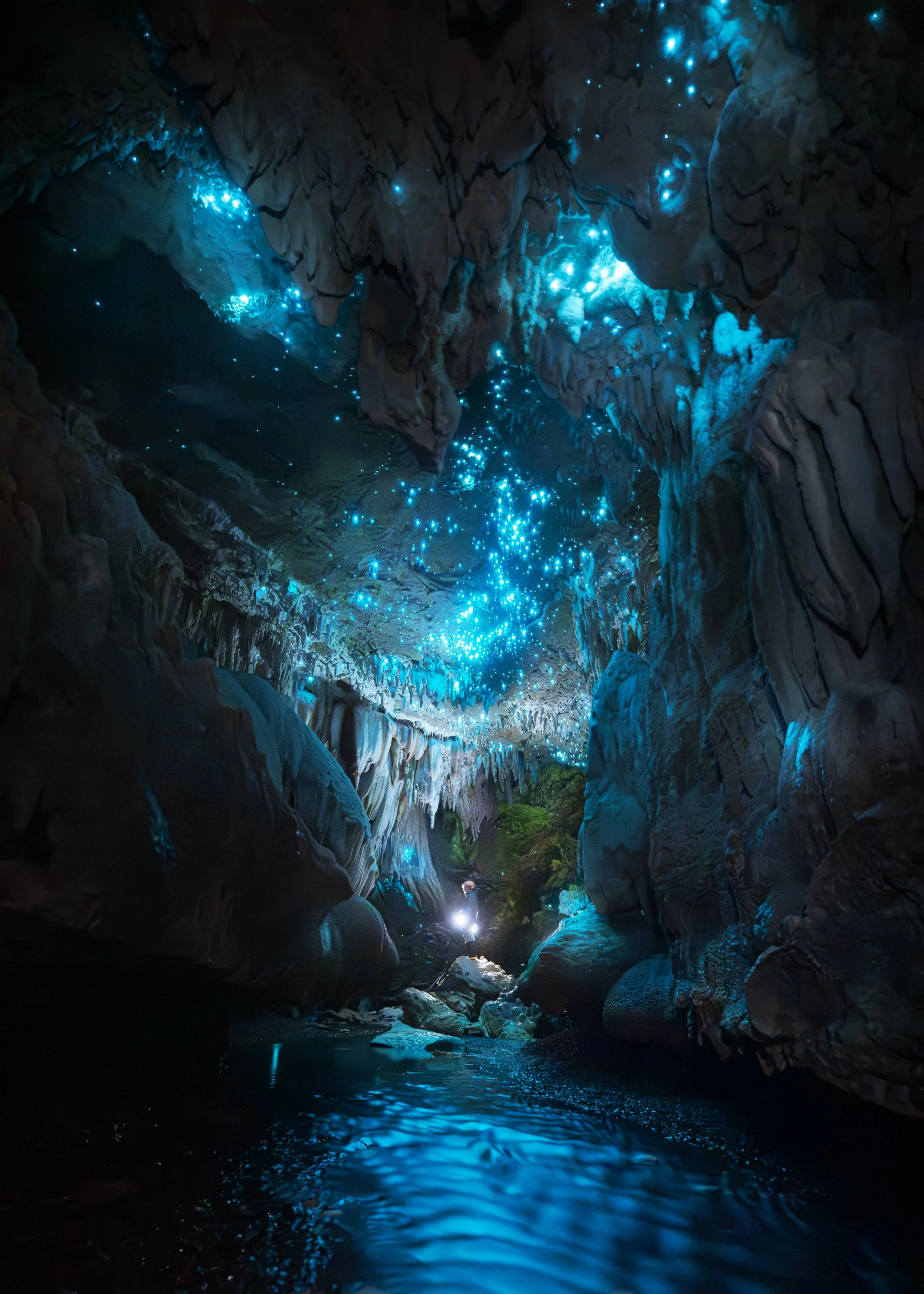

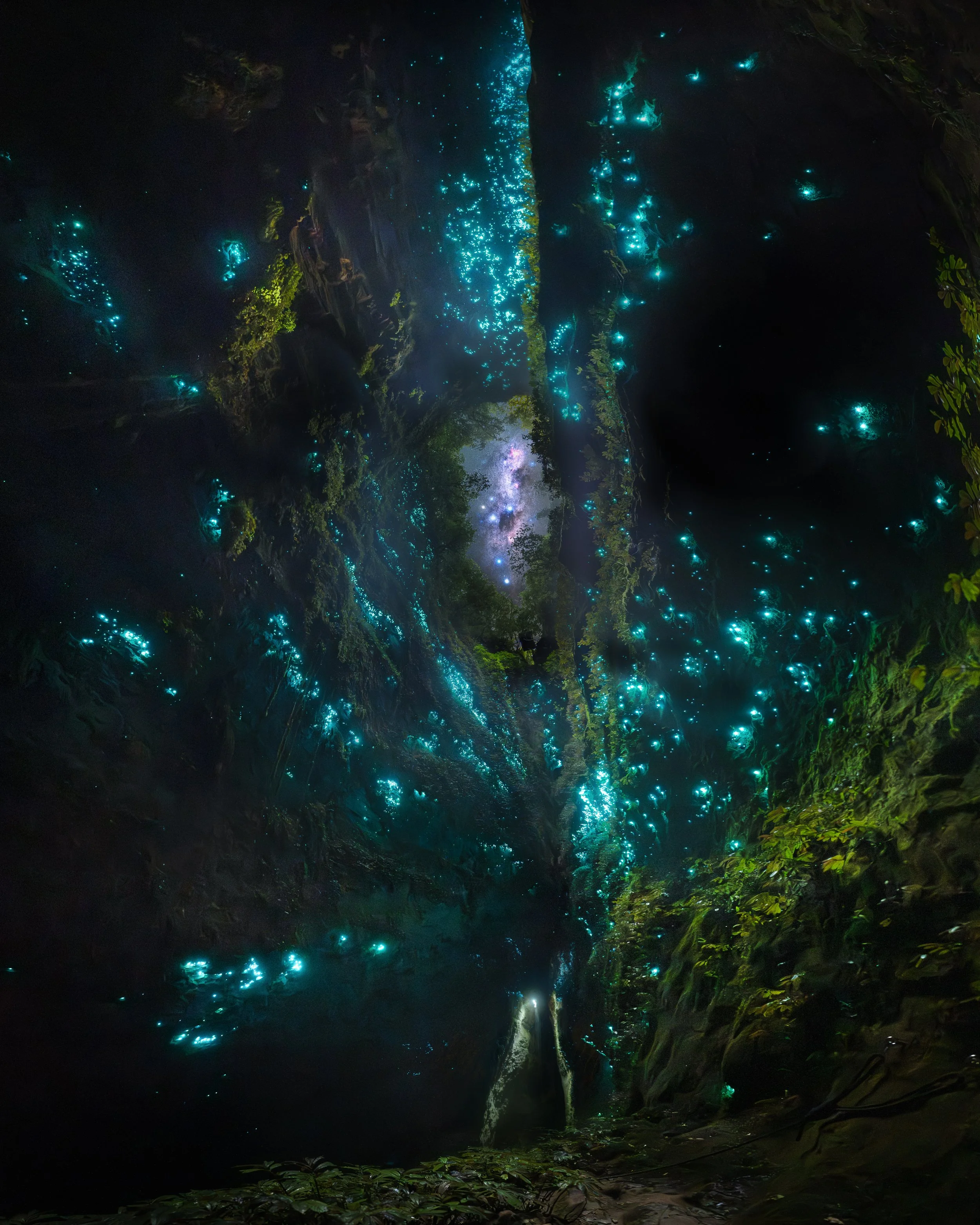
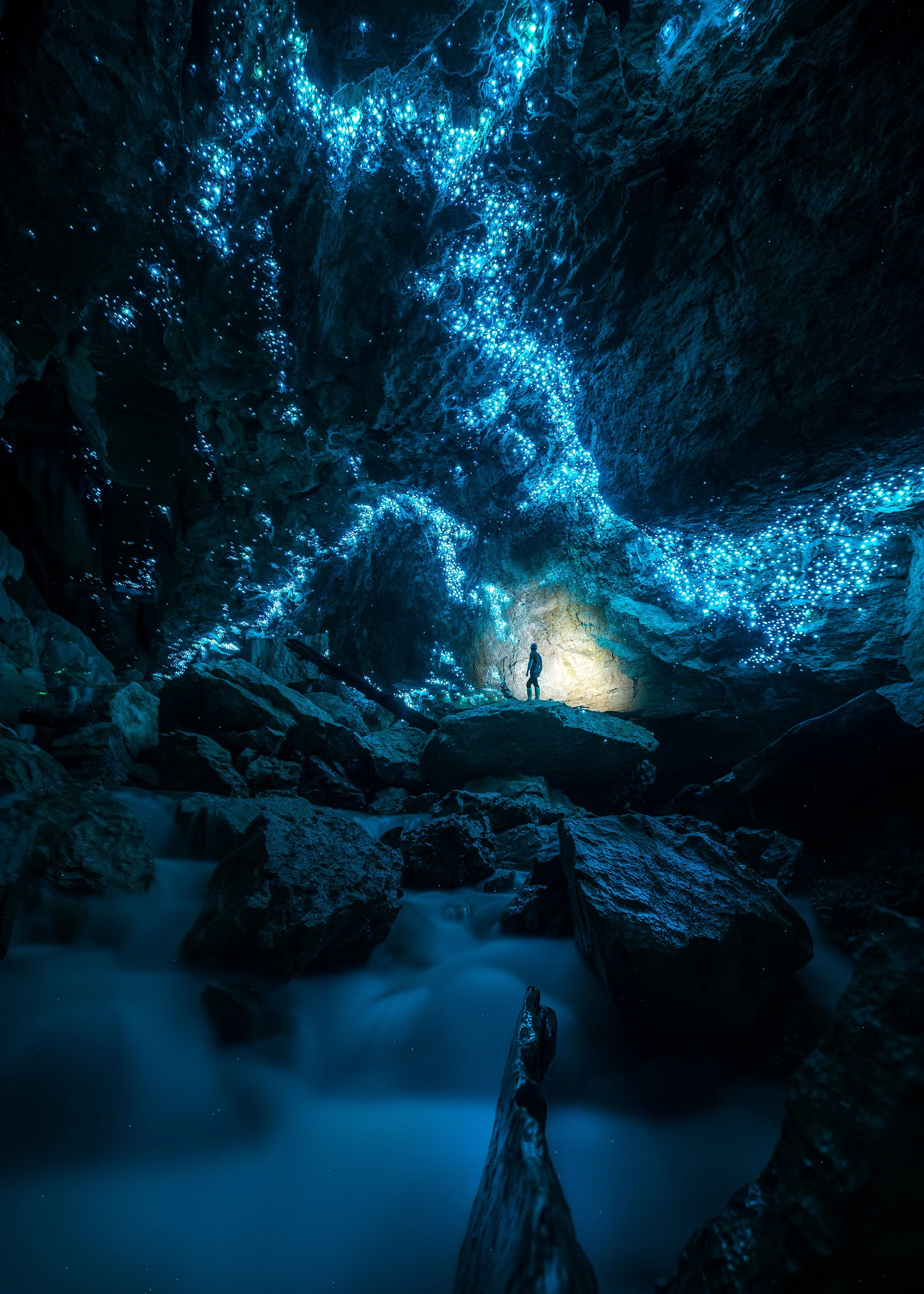
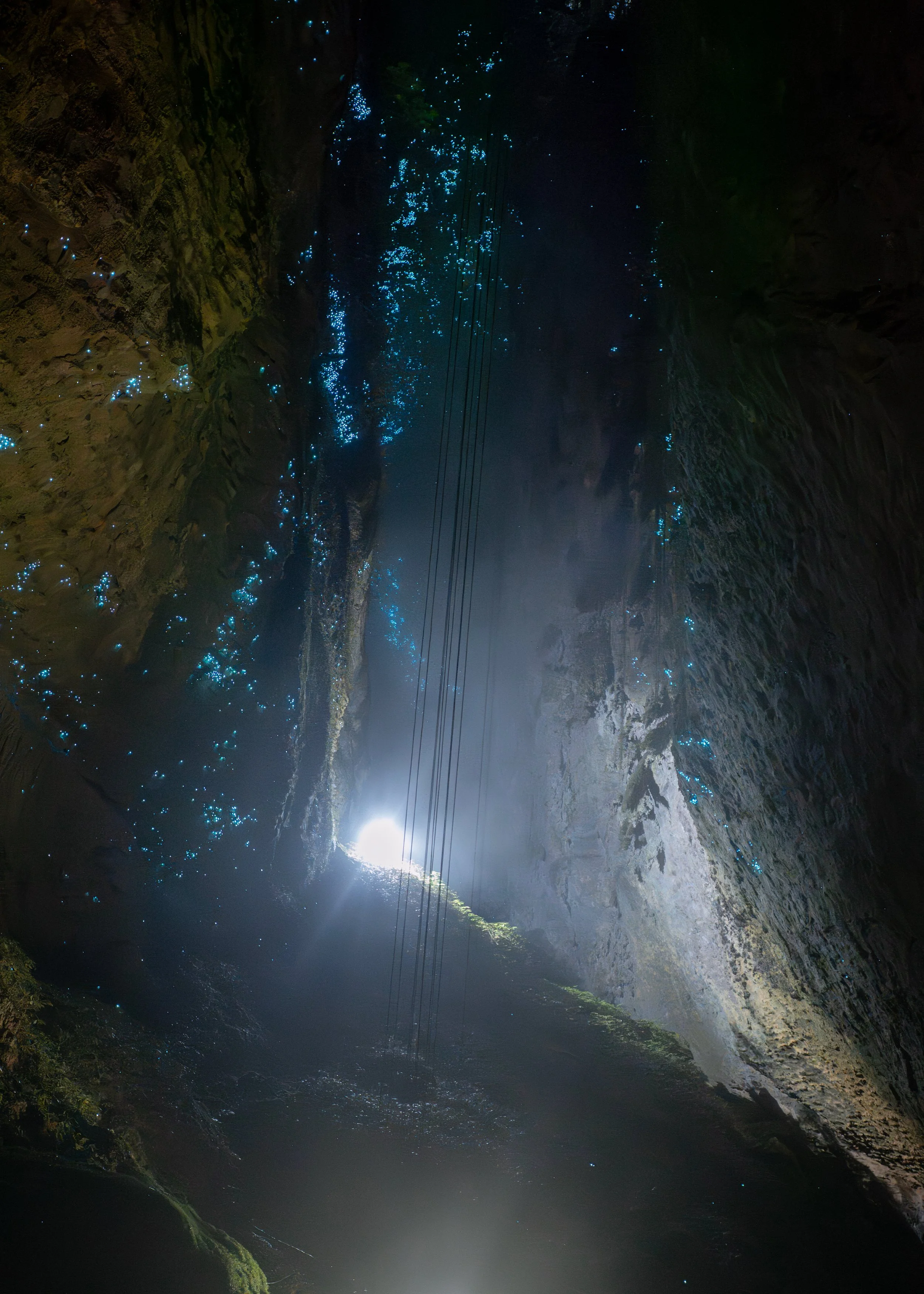
It’s impossible for me to convey in my mortal words what a trip with Waitomo Adventures was like, I cried will Abseiling (Kiwi version of rappelling for us United States folks) or Rappelling down 100 meters (330 feet) in complete darkness surrounded by thousands of Glow Worms lining the canyon walls. I’d call this place the Grand Canyon of the underworld, and it’s possibly the grandest canyon in New Zealand even just on sheer size.
They run daily tours rappelling down into the abyss, but we specially requested to go down at night! They even filmed a Mr Beast video in here at one point for 7 nights. But we may have been the first to every photograph the cave entrance at night, attempting to capture the Glow Worms and the night sky! It was one of the most difficult shots of my career and couldn’t have been done without the amazing guides at Waitomo Adventures who were the backbone of the operation. Some of my long exposures were 7 minutes! It took hours upon hours to HDR or take different long exposures at different exposure values, I enjoyed every single moment. Dripping from the canvas at the top, bats swooping in, the river cutting through the gorge, and thousands of little glow worms lighting up the way! I enjoyed every moment.
Later on I combine and overlay those images together, allowing to see the full dynamic range of the cave. Several of my reels have gone viral on social media with lots of claims of AI, but none of this is AI- it is dreamy and a bit beyond what the unaided eye can see, but that’s the point of long exposure: capturing longer expanses of time into one digestible photo to reveal real lighta and colors in the night and night sky! It’s somewhere between what your eye would see, and 7 minutes of what your eye could potentially see encapsulated into a single moment. This one is really epic during the day even, we ended up doing a full day tour and a night tour- you aren’t guaranteed it but it’s worth reaching out if you have the time and money.
Seriously one of the coolest moments of my life!! Again, it was the first time I had cried tears of joy in a long time.
If you’d like to do this adventure yourself, Waitomo Adventures does day time tours that end up in beautiful glow worm chambers deeper into the system. You can request them for a night abseil, which they may accommodate! Otherwise, the next opportunity will be during out Glow Worm and Wildflower New Zealand group trip December 2026 where we will be working with Waitomo Adventures and other caves for the most epic Glow Worm and photography trip!!
3. Spellbound Glowworm cave and tour
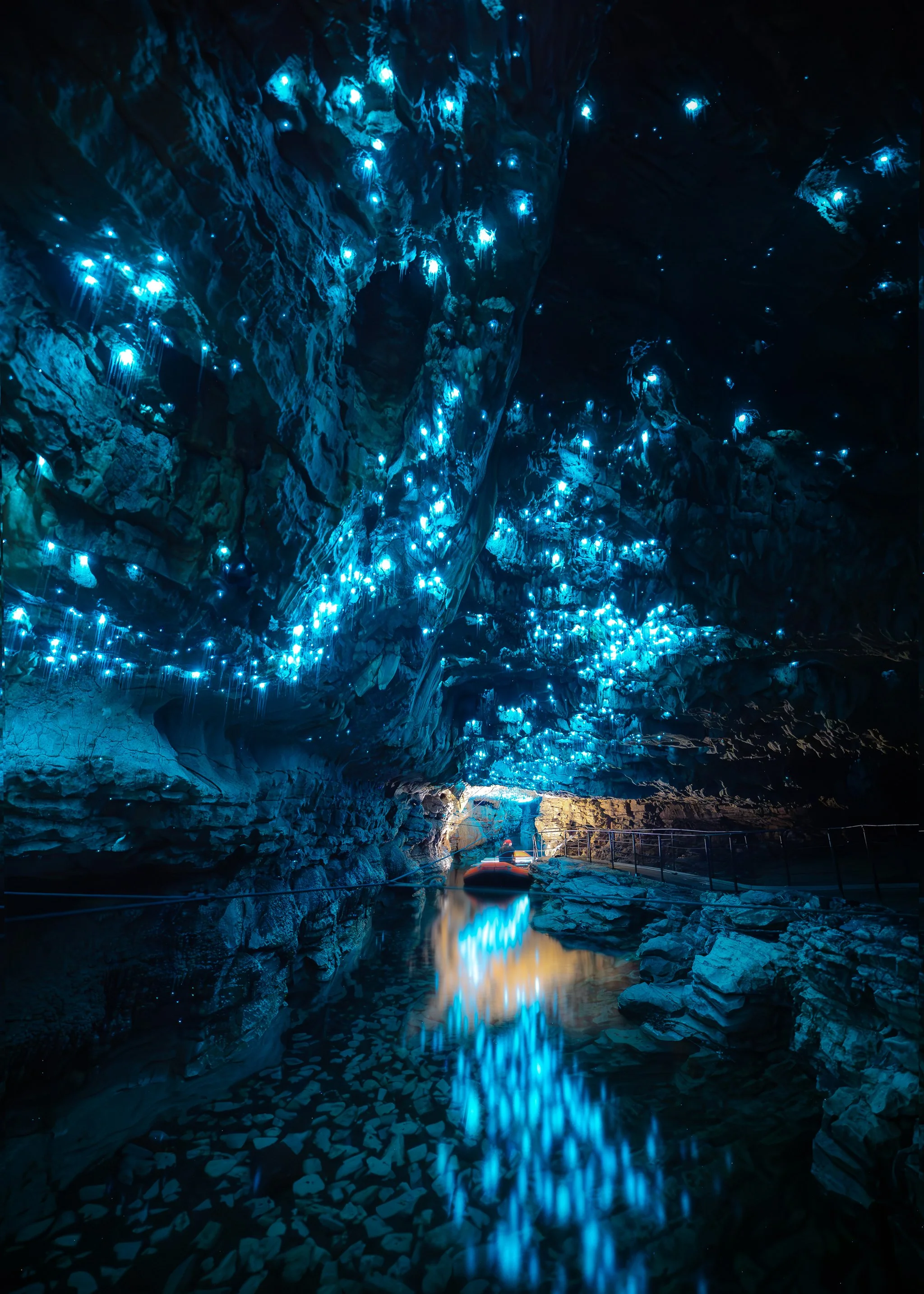
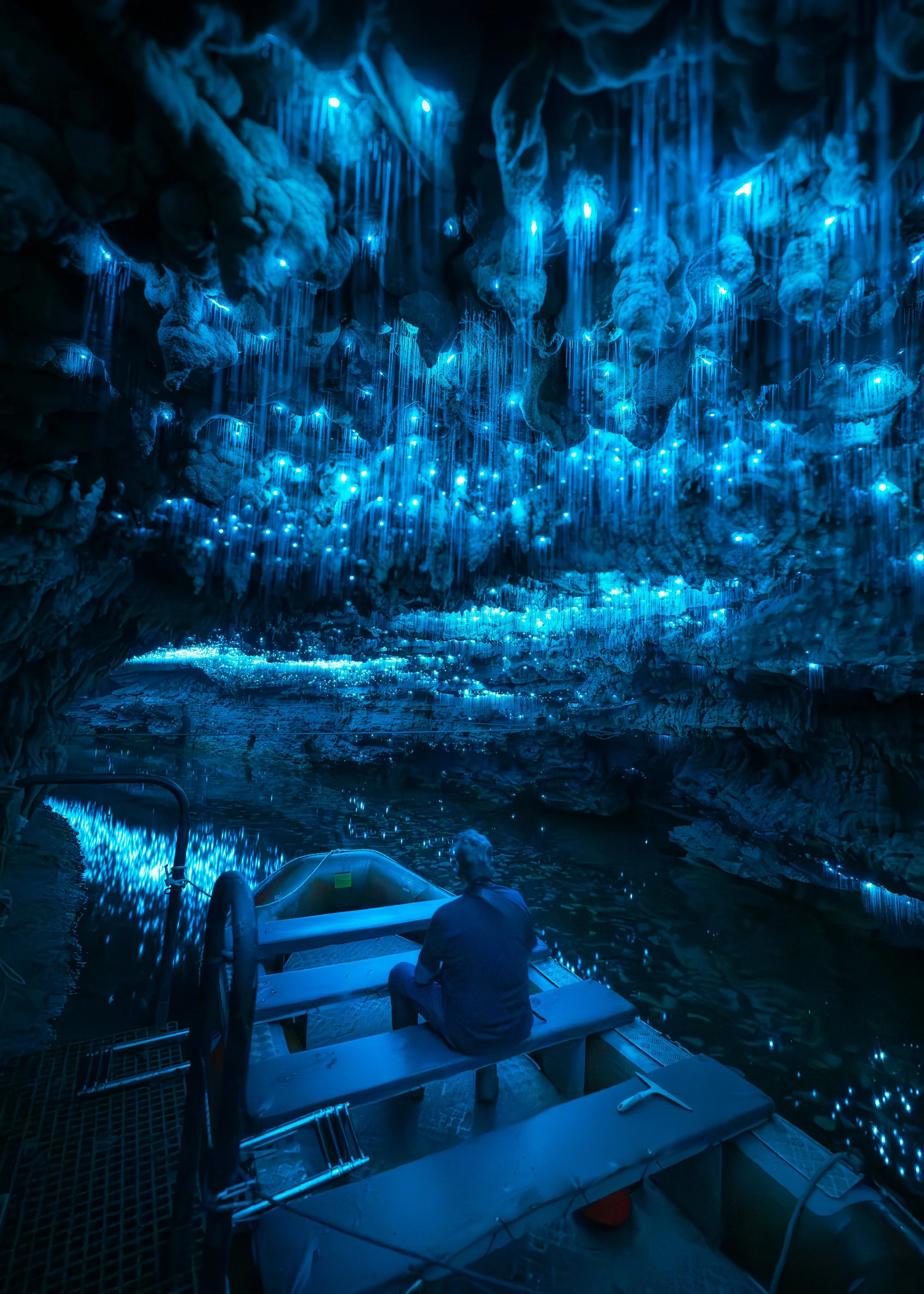
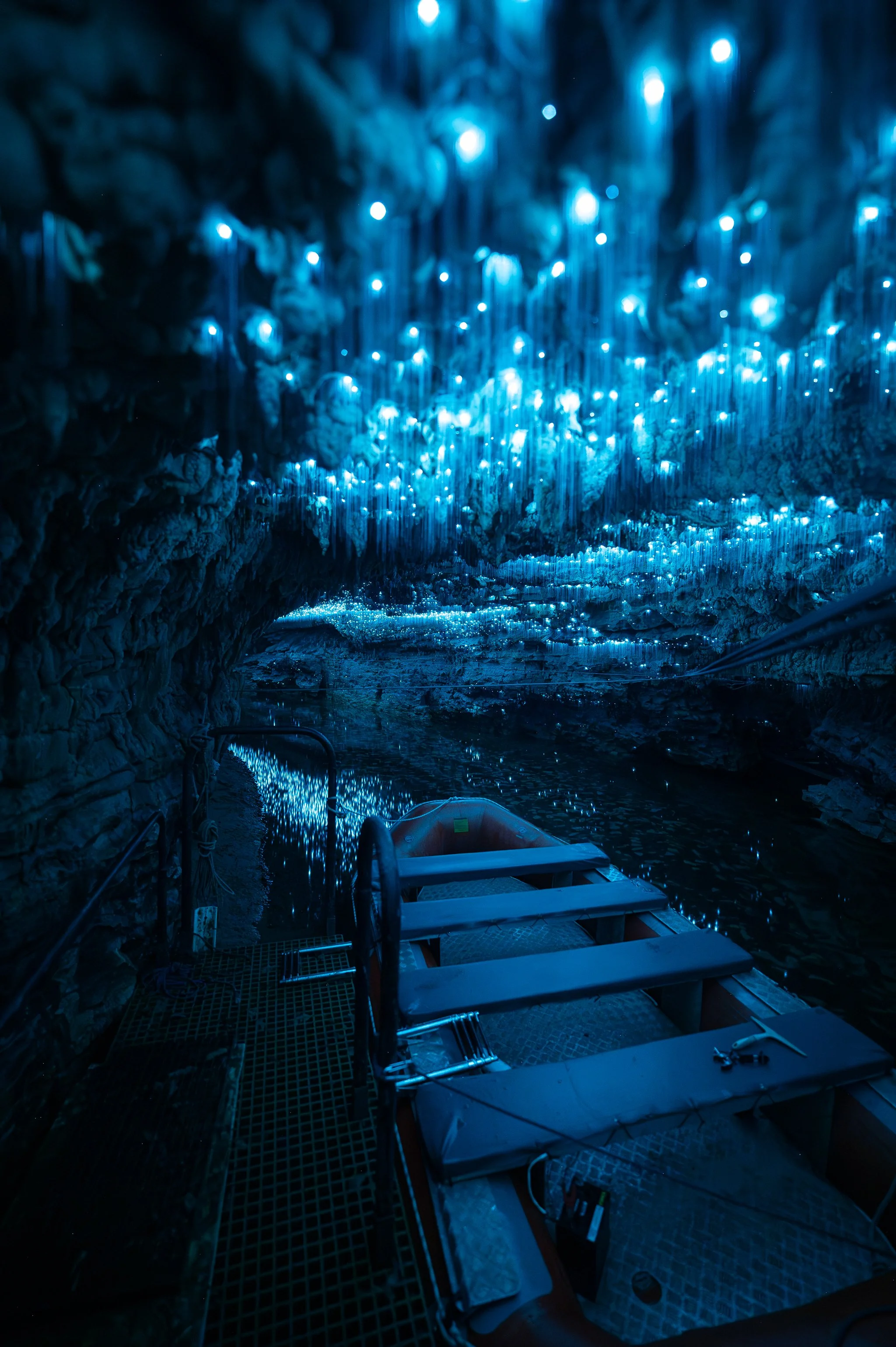
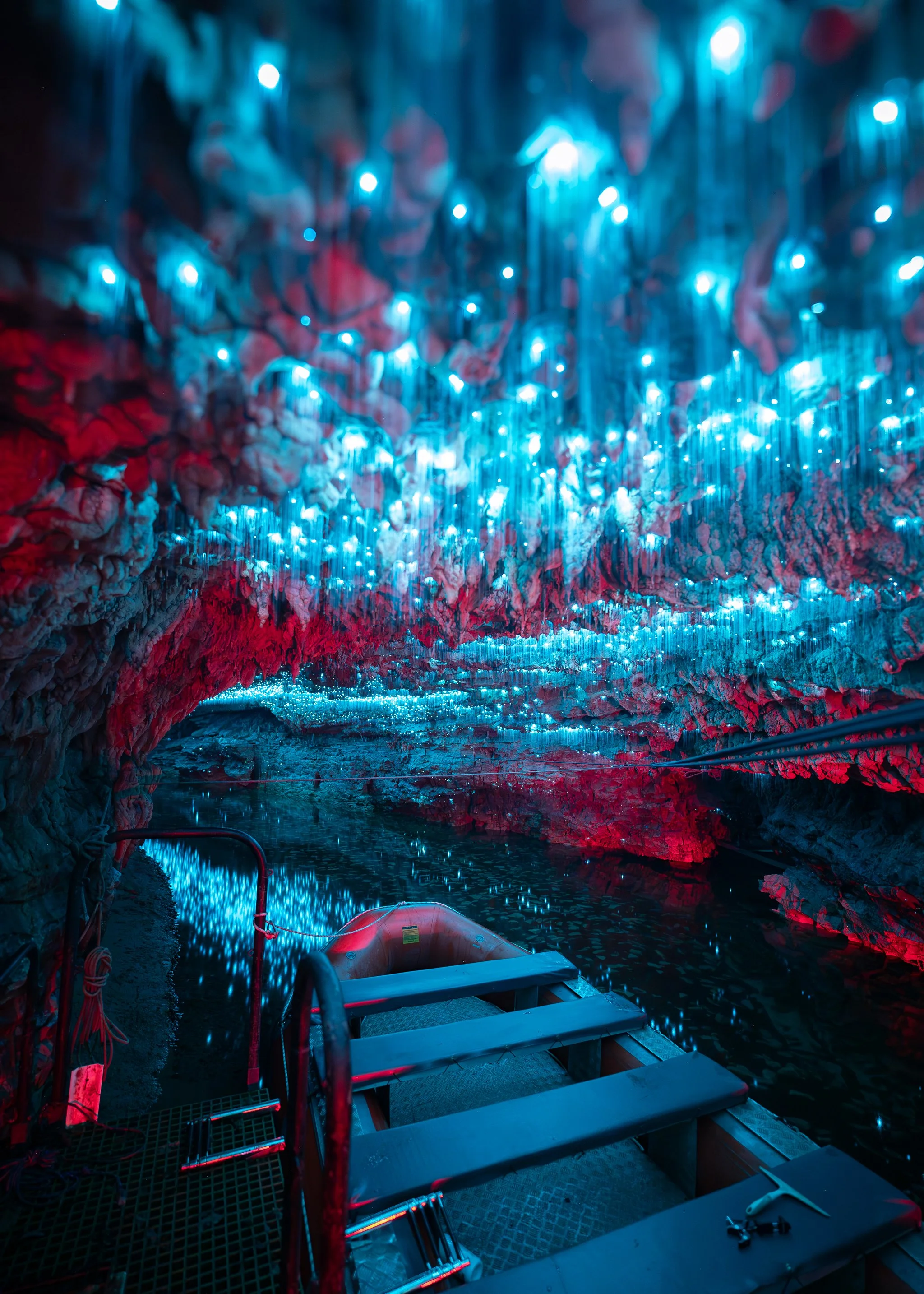
Spellbound Glowworm Cave and Tour is phenomenal and extremely unique as it has one of the only grandfathered dams in a cave system, offering an “gondola like” boat ride adventure down a stretch of river through their cave under thousands and thousands of glow worms! New Zealand, both culturally and in law, take conservation of their natural resources very seriously- a dam nowadays probably wouldn’t be allowed, but this one was built long ago and is very small with a specialized “eel ladder” where they can climb up and down without issues. They had a 70 year old or so Eel just hanging out in the river outside the cave, she was one of the prettiest and most well-behaved eels I have seen among many.
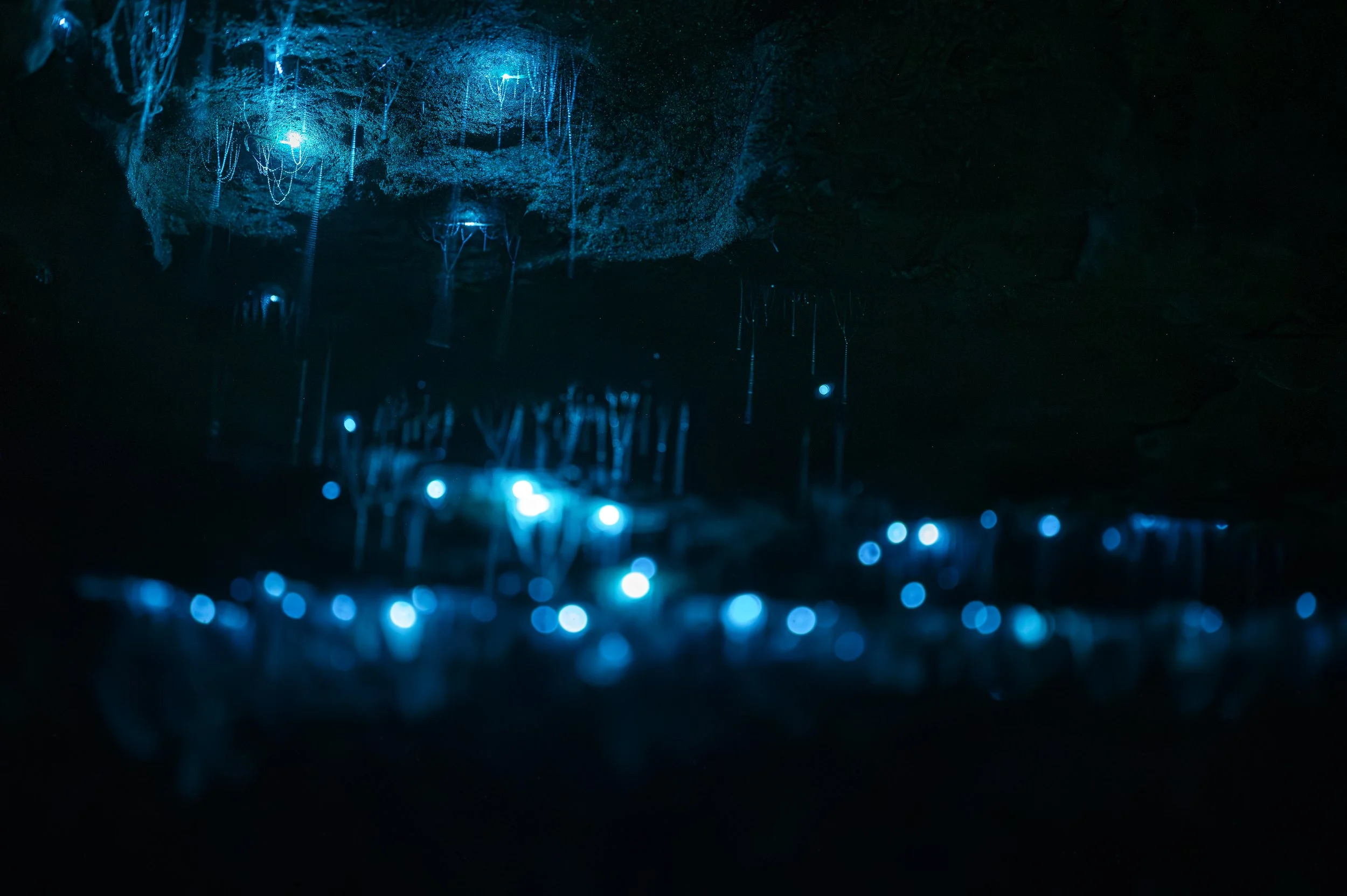
The glow worms were so densely populated and the ceiling not so high, we didn’t need our headlamps at all during the tour. Friggin bright!! This tour is by far the easiest physically, it’s authentic but has easy flat walk to the boat, with an amazing platform for viewing thousands of glowworms on a close up overhand with exceptionally long webbings.
4. Waipu milky way caves
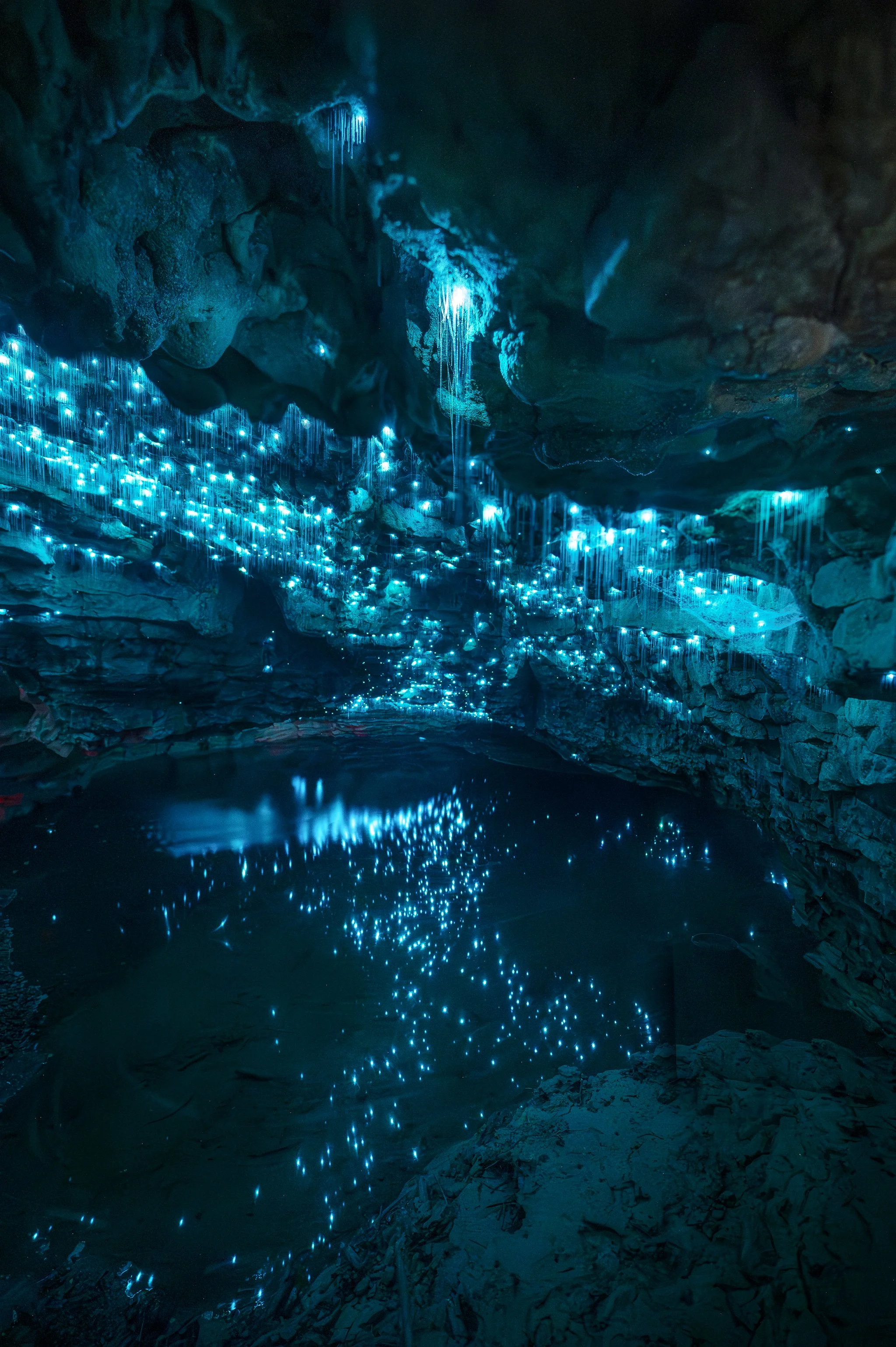
Waipu area has both a guided cave tour and a public cave tour- both are awesome! I recommend doing both as they are minutes from each other. Do the Waipu Milky Way Farm guided cave tour during the day and enjoy Ian or one of the other awesome guides so you can learn about Glow Worms, their life cycle, New Zealand ecology, and much more. The Milky Way cave tour is really fun and an essential to any comprehensive glow worm exploration.
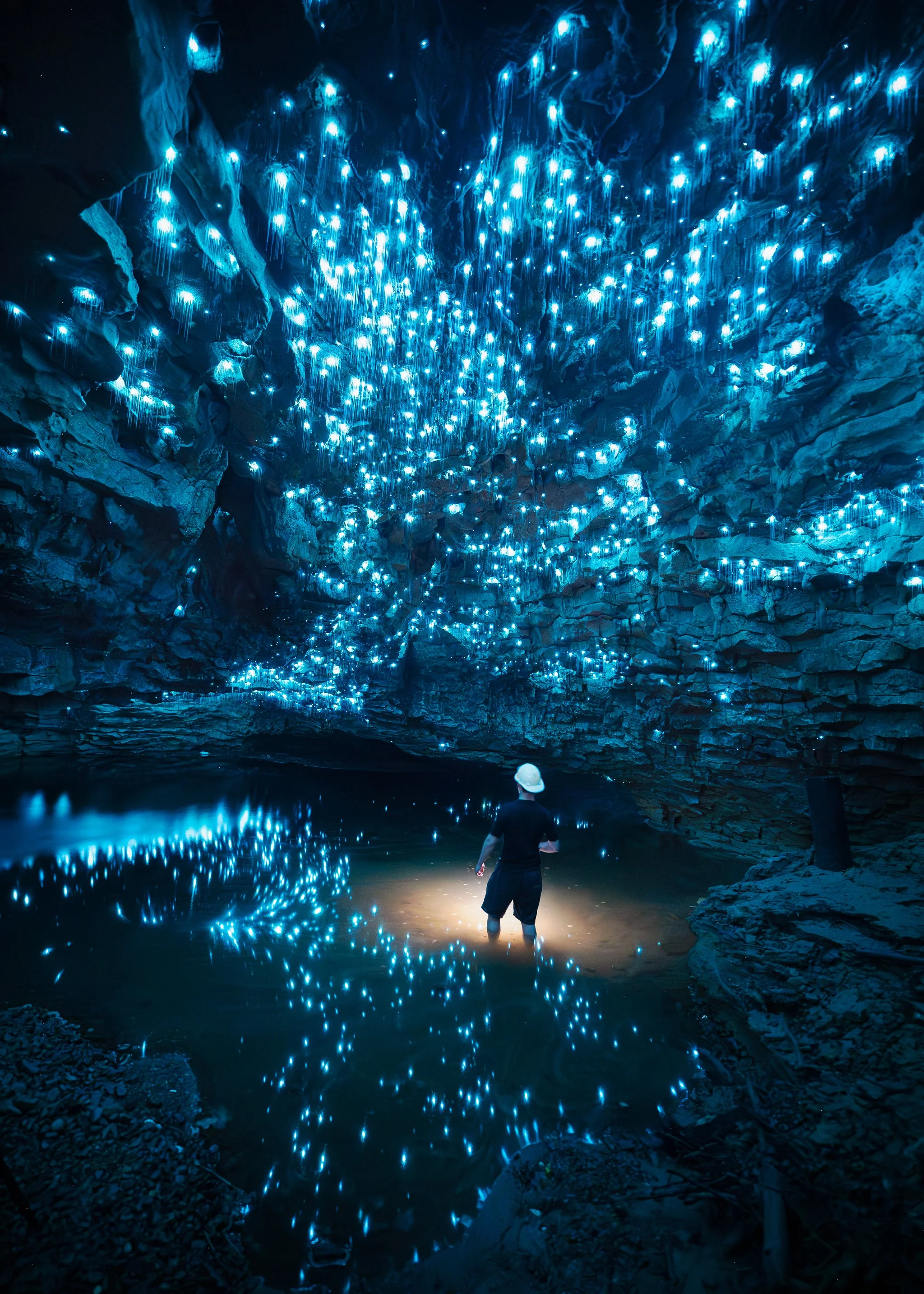
Once finished, I recommend going to the free Waipu public caves around sunset or later. This free public cave can get really hectic and honestly crowded during peak day hours around holidays and such which can really take away from the experience. Although, I have run into quite a few people in my times visiting this public cave, and it’s really enhanced my experience! Often alone, it’s much cooler to experience the phenomenon of bioluminescent glow worms with other humans who are also in awe!! The PROBLEM with this public cave is that every one goes during the day, and they miss the BEST chamber in the system. It’s an easy cave to navigate in, and during the day the back chamber is amazing 24 hours. However, once the sun sets, the cave entrance of the Waipu cave is STUNNING. There are tons of glow worms in the main chamber that turn their lights on and are now visible at night. It might be one of the most picturesque glow worm caves in the world. I’ve spent a lot of time and effort in many caves and this cave area just made it’s own composition for us, glowing brightly and with lots of beautiful stalactites.
I recommend staying in Waipu or my favorite, Ruakaka Beach Motel in Ruakaka! Nothing like enjoying a warm New Zealand beach during the day and glow worms by night!